Uber · Driver App
Driver App —
Tax Documentation Suite
End-to-end UX writing and compliance copy for Uber’s driver-facing tax features across the U.S., Canada, and Australia. A project that started as a compliance requirement and became a financial access tool for gig workers worldwide.
IRS W-9 form — 3-step flow
Uber’s driver partners were submitting incorrect SSNs and EINs with no validation — creating IRS compliance exposure at scale. I authored all microcopy for the W-9 flow: field labels, inline guidance, error states, certification language, and backup withholding explanations, vetted with Uber’s legal and tax teams.
Copy was designed to reduce support calls by answering the most common questions at the exact moment they arise. The form guides drivers through tax classification, address verification, and legal certification — in plain language a non-expert can act on independently.
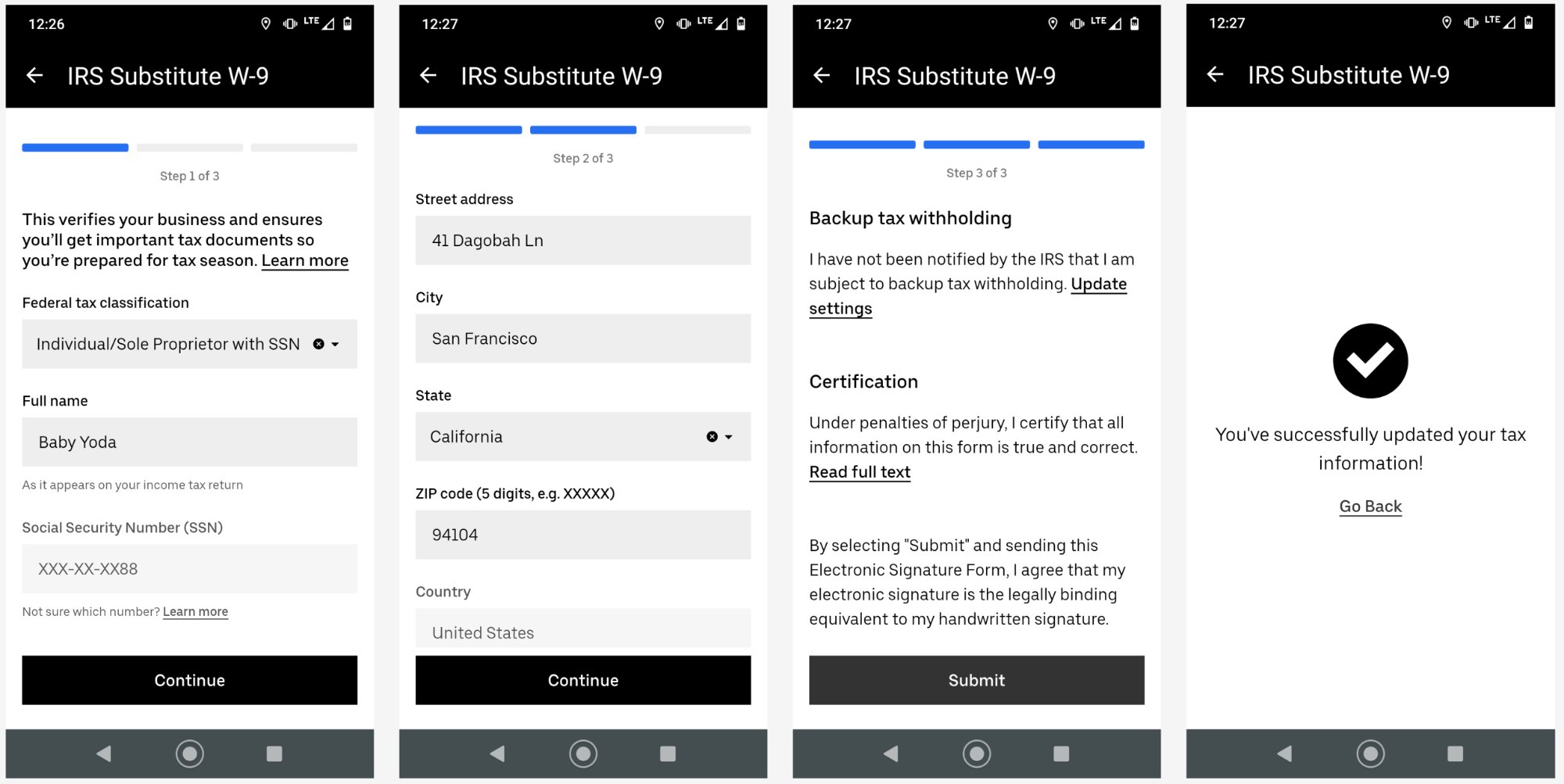
Click to enlarge · 4 screens: step 1 of 3 through success state
Tap states & contextual messaging
The hardest part of a compliance form isn’t the fields — it’s the moment a driver hits an unfamiliar term and abandons. I wrote all tap state content: the “ⓘ” tooltips and contextual overlays triggered throughout the form.
Each touchpoint answers one question at exactly the right moment — what this field means, why it’s required, what to do if something doesn’t match. Small copy. High stakes. Measurably reduced support volume.
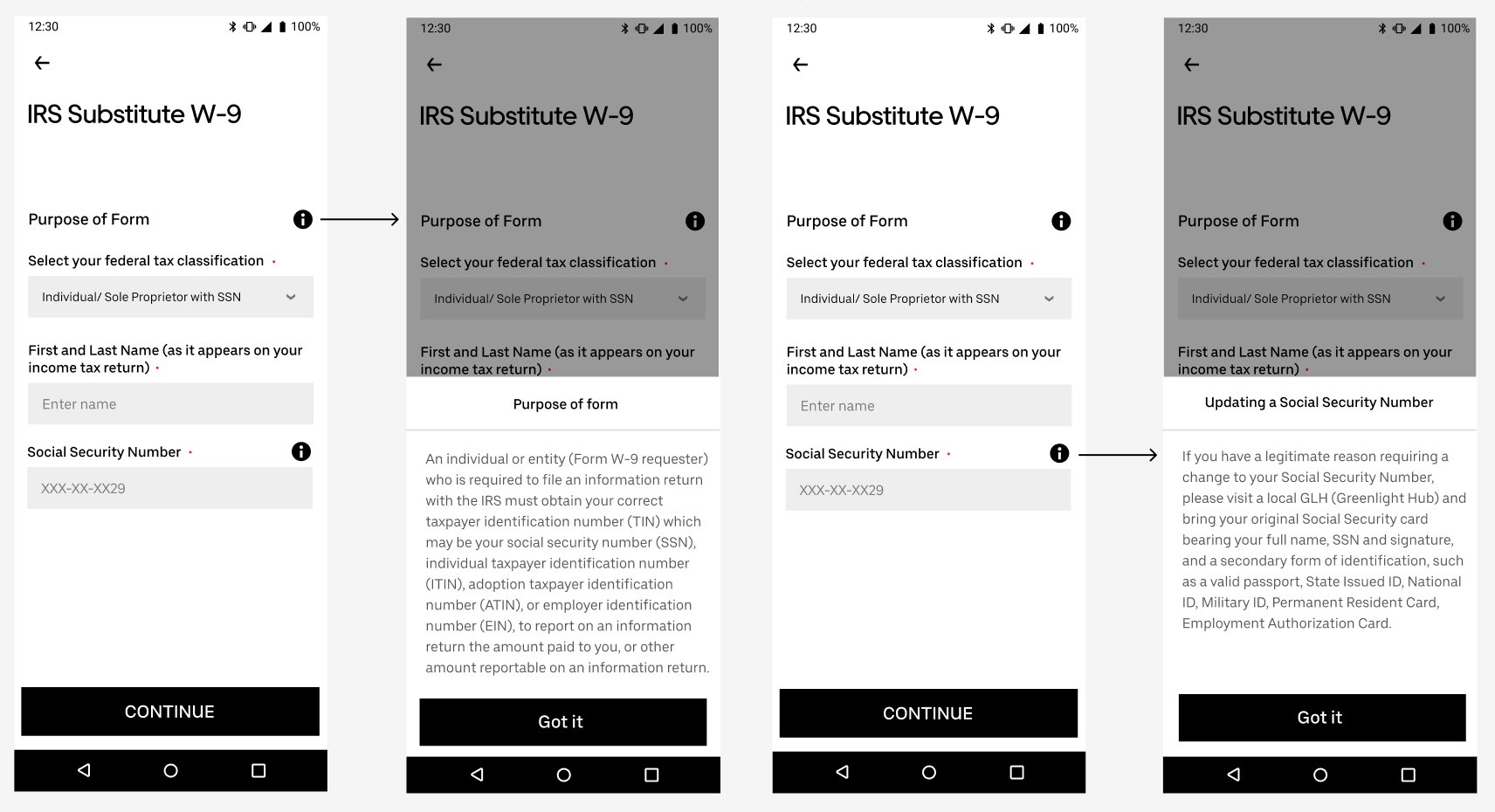
Click to enlarge · Purpose of form overlay and SSN update guidance
1099 tax form navigation
Tax season creates a spike in driver support calls — most asking where to find their 1099. I wrote all navigation labels, section headers, and contextual descriptions guiding drivers from the main menu through Account → Tax Info → Tax Forms.
Each label earns its place: “For filling your tax return with the IRS” does more work than the form name alone ever could.
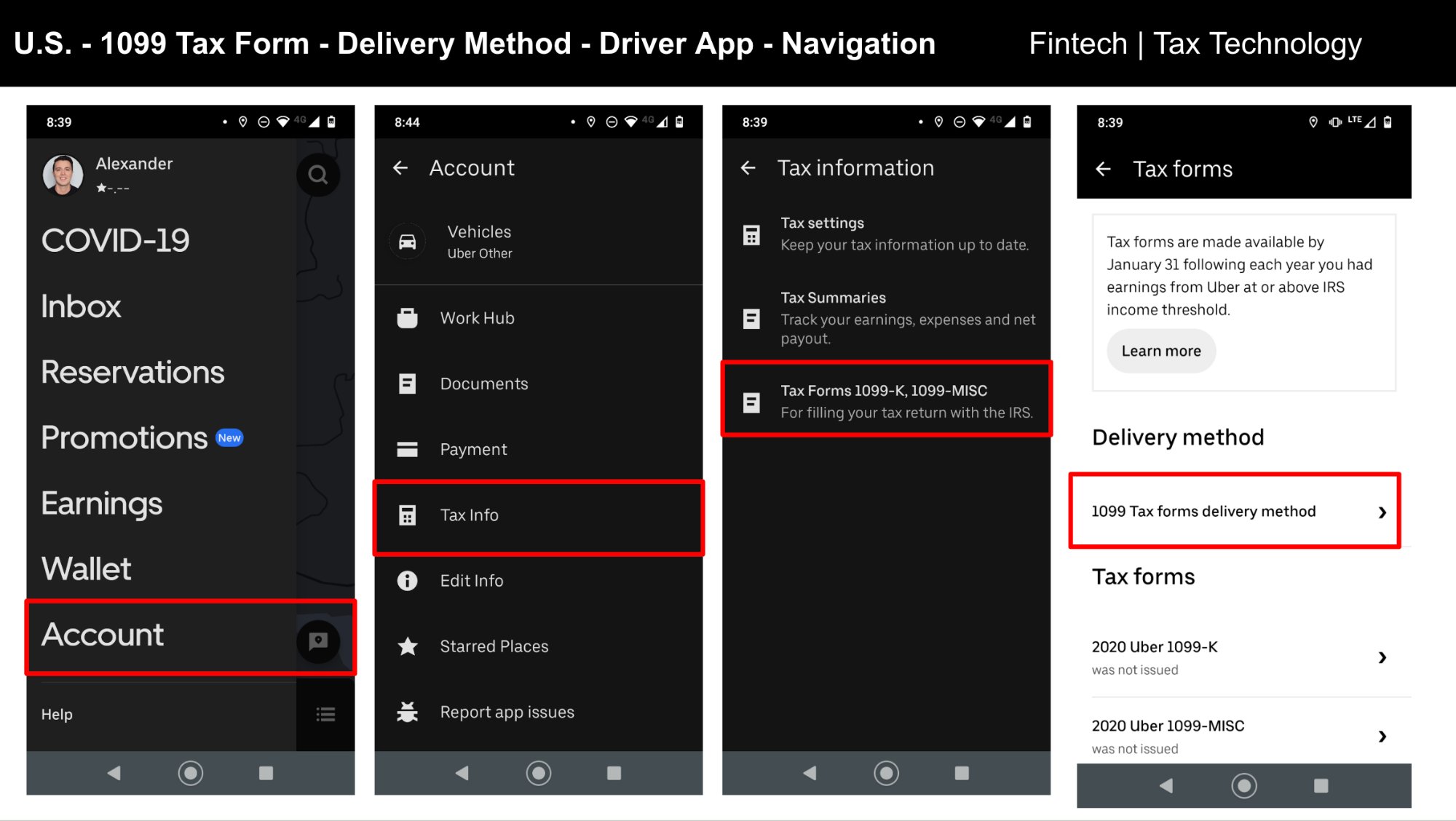
Click to enlarge · 4 screens: account menu through tax forms list
1099 delivery method selection
The end-to-end delivery selection flow — from Tax Forms overview through delivery preference, address confirmation, and success state. The toggle copy “I want to receive my 1099 by mail” is doing quiet but important work — first-person framing, plain language, no legalese.
The confirmation screen resolves the anxiety of “did that work?” immediately, and tells drivers exactly where else to find their forms if needed.
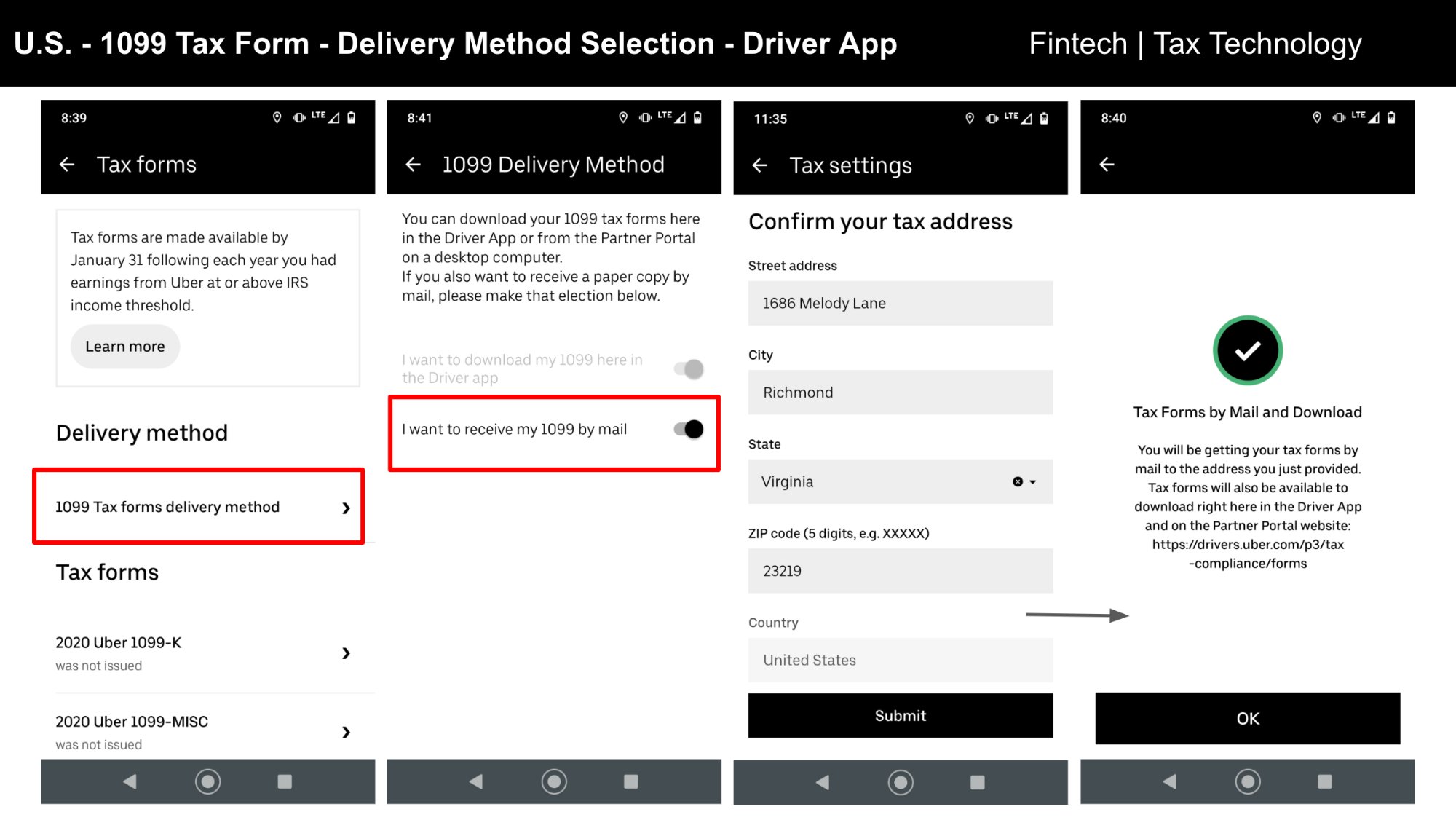
Click to enlarge · 4 screens: delivery method through confirmation
Tax summary documents — multi-market
Driver partners were calling support to understand their own earnings statements. I led content development for Uber’s Tax Summary documents across the U.S., Canada, and Australia — section headers, line item labels, disclaimers, and contextual help. Every word had to be verifiable fact, not tax advice — navigated in close collaboration with Uber’s tax, finance, legal, and HR teams.
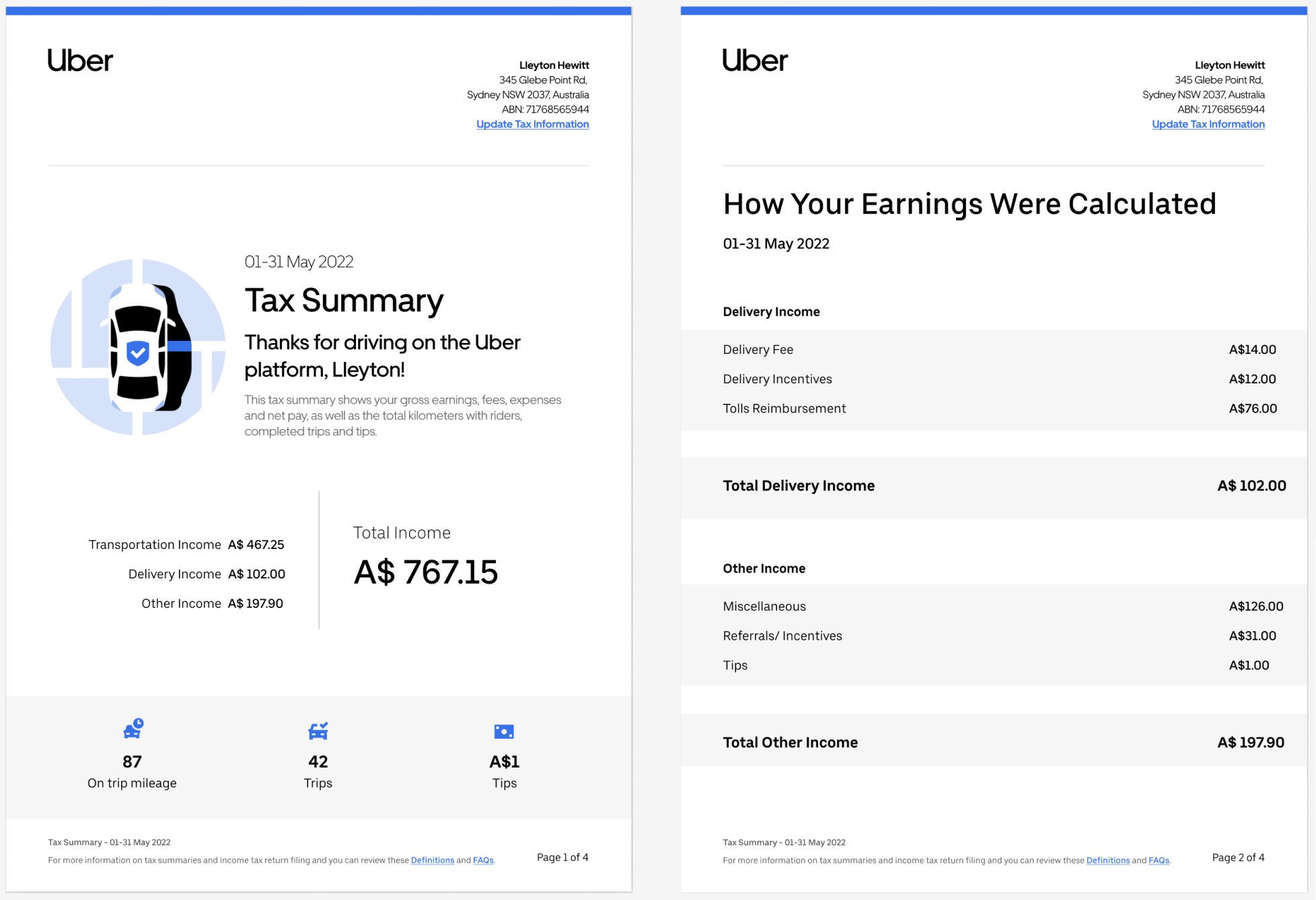
Pages 1–2: overview & earnings breakdown
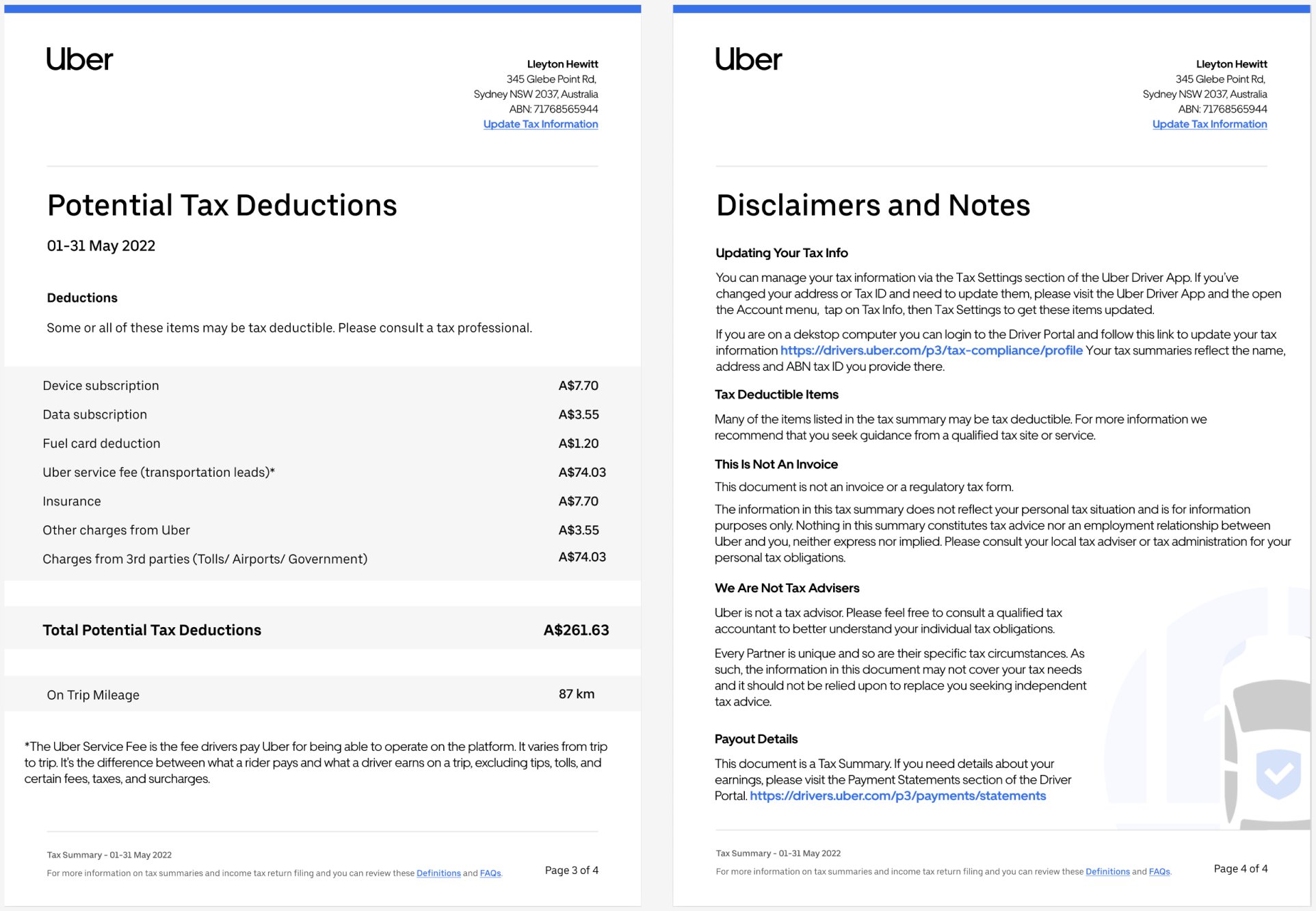
Pages 3–4: deductions & disclaimers
Before this redesign, Uber’s tax documents were unbranded pages that partners — and in some markets, banks and government officials — didn’t trust. After the redesign, the documents were accepted as formal proof of income in several markets, helping drivers qualify for credit cards, consumer loans, and financing. A compliance artifact became a financial access tool for gig workers worldwide.